

Learning Is a Conversation

Introducing Canine Zen’s Understanding Learning Series
By: Stephanie Barger, CSAT, CBCC-KA, CPDT-KA

Learning is a conversation between you and your dog, even when your dog answers with silence. Yesterday, your dog lowered their body before you finished saying, “Lie down.” Today, your furry friend stands and looks at you as if in a foreign language class.
A few seconds pass, and your mind gets busy.
“My dog knows this.”
“What changed?”
Most of us grow up thinking learning looks like a test. Someone asks a question, you give the right answer, and everyone moves along. Without realizing it, you may carry those expectations into life with your dog.
Your dog may experience the moment in a very different way. They may need time to process the cue. The floor may feel slippery. A sound outside may catch their attention. They may feel tired, excited, unsure, or distracted. Today’s situation may feel different from yesterday’s, even when the cue stays the same.
Every response tells you something.
When you view learning as a conversation, you trade scorekeeping for curiosity. Your dog responds. You observe. You adjust the situation. Your dog responds again. Each exchange gives both of you new information.
That change in perspective leads to a better question. Instead of asking, “Why didn’t my dog do it?” you begin asking, “What is my dog trying to tell me?”
Welcome to Canine Zen’s Understanding Learning series. Together, we’ll explore how dogs learn and how reinforcement, motivation, emotions, confidence, body language, and context shape every response.
It all starts by listening.
Why We Expect the Right Answer
Long before you ever worked with a dog, someone taught you what learning should look like. Raise your hand. Fill in the blank. Circle the right answer. Get the grade.
That idea follows you more easily than you may realize.
Your dog sits in the kitchen, and everything feels smooth. Later, you ask for the same cue near the front door, and they pause. The cue stayed the same, but the room changed.
The front door may bring new sounds, fresh smells, movement outside, and the promise of a walk. Your dog now has more information to sort through.
You see the same pattern in other parts of daily life. Your dog may offer a paw in the living room, then pull it back when the nail clippers appear. They may come quickly in the backyard, then slow down at the park where birds, bikes, children, and scents compete for their attention.
Your dog still knows the skill. The setting changes the conversation.
This is where context matters. Your dog’s emotions, comfort, past experiences, and surroundings all shape how they respond in that moment.
When you notice those details, you stop keeping score and start gathering information. The question shifts from “Why didn’t my dog do it?” to “What changed for my dog?”
Listen Before You Decide
Imagine asking a friend a question and getting an unexpected answer.
You probably wouldn't argue with them. You'd become curious. You'd ask another question or look for more information before deciding what was going on. Your dog deserves that same curiosity.
A pause may mean they need another moment to think. Looking toward the window may tell you they heard something you missed. Walking away may mean the environment feels overwhelming or they need a break.
When you slow down and observe before reacting, you begin noticing patterns. Your dog may learn new skills quickly in quiet places and need more support in busy ones. They may stay engaged during short sessions and lose focus when they become tired.
Learning becomes much less about getting the "right" answer and much more about understanding the dog in front of you. Your dog learns that you are paying attention, and you become better at recognizing what helps them succeed.
Every Conversation Teaches Two Learners
When people talk about training, they usually focus on what the dog is learning, but you are learning, too.
With every interaction, you discover what captures your dog's attention, what helps them feel confident, and what makes learning easier. You begin to recognize the difference between a skill that is still developing and a situation that simply asks too much.
Your dog learns about you as well. They learn that you notice when something feels difficult. They learn that trying is safe. They learn that communication matters because someone is listening. That shared understanding strengthens your relationship far beyond a single cue.
Over time, you stop measuring success by how quickly your dog responds. Instead, you notice something much more meaningful. You and your dog understand each other better than you did yesterday.
That's what real learning looks like. It's a conversation that grows stronger every time you listen.
Listening Changes the Relationship
When you treat learning as a conversation, your dog feels the difference.
You give them time to think. You notice when the setting feels too hard. You change the situation before frustration grows. You reward effort, curiosity, and progress.
Your dog learns they can communicate without fear. They learn that a pause, a glance, or a step away gives you useful information. They also learn that trying feels safe, even when the answer takes time.
The best part? You gain confidence, too. You begin to read the small details that once passed unnoticed. You see when your dog needs a quieter space, a shorter session, or a clearer cue. You also learn when to pause and return later.
Success starts to look different. It may mean your dog stays near you in a busy place. It may mean they recover faster after a surprise. It may mean they offer a small step toward a skill that once felt hard.
Keep the Conversation Going
Every time you work with your dog, you have a choice. You can look for the right answer, or you can stay curious about the conversation unfolding in front of you. Your dog is always sharing information through their behavior. Sometimes the message is, "I'm ready." Sometimes it's, "This feels hard." Sometimes it's, "I need a little more time."
The next time you ask for a cue and your dog pauses, resist the urge to decide what that pause means. Take another look. Notice the environment. Think about how your dog is feeling. Then ask yourself one simple question.
"What is my dog trying to tell me?"
The answer may surprise you.
And it might just be the start of something beautiful.
About Stephanie Barger, Canine Zen
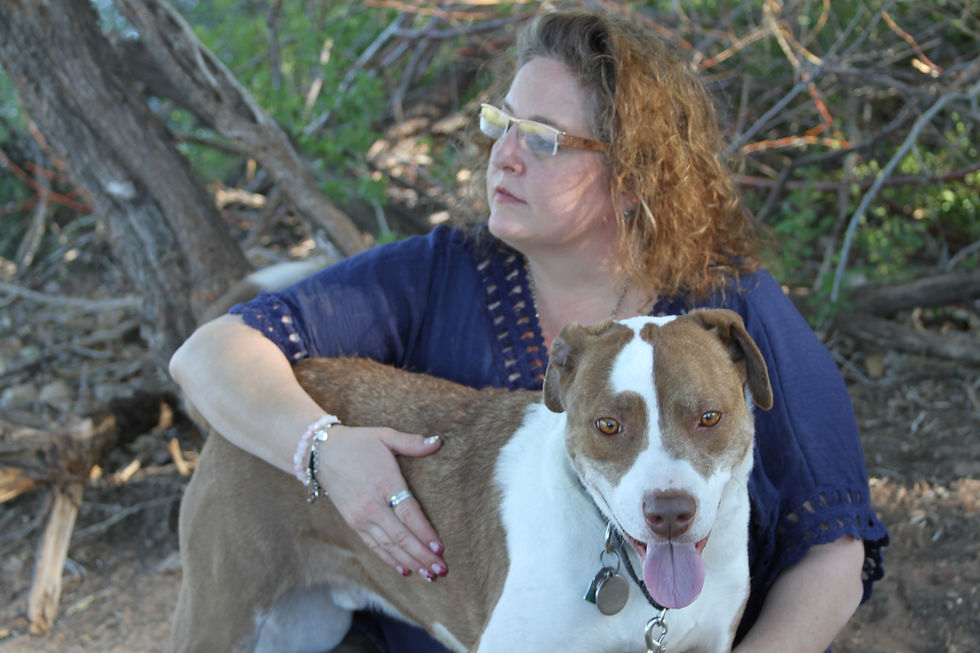
Life with your dog may look very different than you imagined. Some days feel joyful. Other days leave you wondering what happened and why nothing seems to help.
Stephanie Barger believes every behavior has a story, and every dog deserves someone willing to listen.
As a Certified Separation Anxiety Trainer (CSAT), Certified Behavior Consultant (CBCC-KA), and Certified Professional Dog Trainer (CPDT-KA), Stephanie has spent more than a decade helping guardians better understand their dogs. Before becoming a dog trainer, she taught people, and that love of teaching remains at the heart of everything she does. Her goal is to help you see your dog's behavior through a different lens so you can move forward with confidence, compassion, and practical solutions.
The name Canine Zen reflects Stephanie's philosophy. Dogs are living, feeling, social beings doing their best to navigate a world built for humans. They thrive when they feel safe, understood, and supported. Through thoughtful observation, clear communication, and kind teaching, Stephanie helps dogs and their guardians build trust, confidence, and stronger relationships together.
If life with your dog feels overwhelming, frustrating, or different from what you expected, you are far from alone. Stephanie works virtually with guardians across the country, providing personalized guidance that meets both you and your dog where you are today.
Schedule your Free Clarity Call to talk about your dog, your goals, and the life you'd like to build together.
Free Clarity Call: https://train.caninezen.com/book-free-call-page
Questions are always welcome. Share them in the comments below. Your question may help another guardian, too.
Connect with Stephanie
Facebook (Personal): https://www.facebook.com/StephanieBarger67
Facebook (Canine Zen): https://www.facebook.com/caninezenusa/
Instagram: https://www.instagram.com/caninezen/
Certifications and Professional Memberships
Certified Separation Anxiety Trainer (CSAT)
Certified Behavior Consultant (CBCC-KA)
Certificate of Completion – Aggression in Dogs Master Class
Fear Free Certified Professional (FFP-Trainer)
Certified Professional Dog Trainer (CPDT-KA)
Member, Association of Professional Dog Trainers (APDT)
Member, International Association of Animal Behavior Consultants (IAABC)
Member, Pet Professional Guild (PPG)
Alignable Ambassador, Alliance of Central New Mexico
Alignable Group Co-Leader, Pet Industry Group
Founder and Trainer, Canine Zen LLC


Comments