

Dog Enrichment Balance: Are You Overwhelming Your Dog?

The Difference Between Enough and Too Much
By: Stephanie Barger, CSAT, CBCC-KA, CPDT-KA
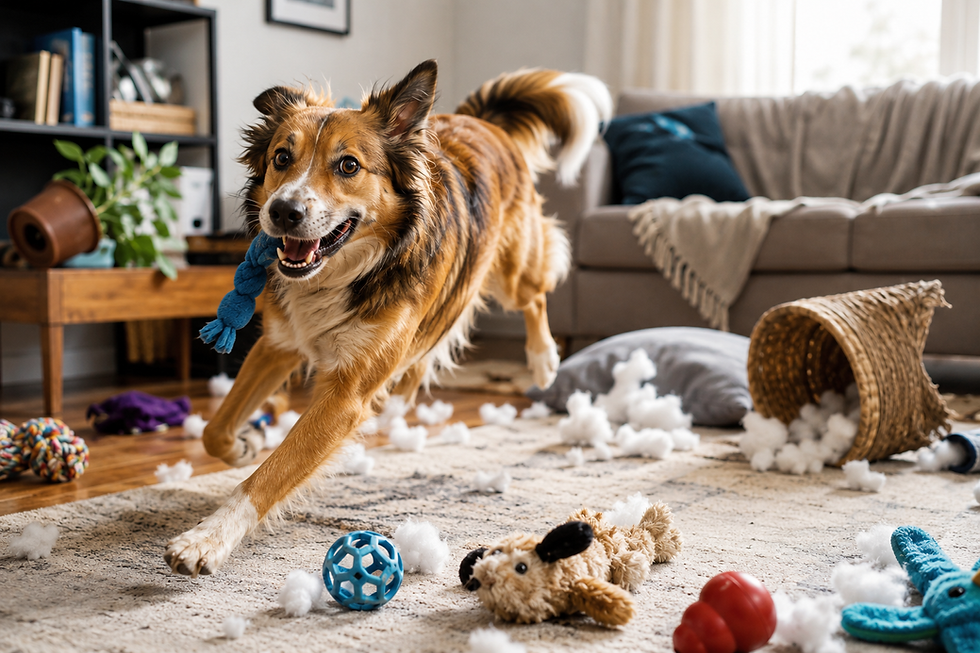
Have you ever had one of those long work weeks where all you crave is collapsing on the couch?
Or picture yourself after an exhausting day, a lengthy training conference, or even a bustling party. Do you find yourself seeking more stimulation? Probably not.Your dog feels the same. Just as you need a break from constant emails, meetings, instructional sessions (heck, even a boatload of beer), your dog needs a break from stimulation.
When Doing Everything Feels Like It’s Not Enough
You wake up early so you can fit in a walk before the day begins. Later, you carve out time for training. You rotate puzzle toys, plan outings, and make sure your dog gets plenty of stimulation.
You pay attention. You try. You care deeply.
And still, something feels off.
Your dog seems more restless, not less. Reactions come faster. Settling feels harder. The patience you expected to grow feels shorter instead. You pause and wonder if you missed something, or if you should be doing more.
It can be confusing and discouraging to feel unsure if you're meeting your dog's needs, especially when you're trying so hard. But what if the solution is actually "less is more?"
When “More”Seems Right, but It’s Not
It’s common to hear you should ramp up your dog’s enrichment. Add another walk. Increase interactions. Build time for more training. While these suggestions are well-intentioned and can be helpful, there's more to the story.
When it comes to canine enrichment, the piece that often gets missed is capacity:
What is your dog capable of, what are their energy levels, and how well does your dog thrive on high maintenance?
Ask yourself, “How would I feel if someone asked me to do more training, walking, and interaction every day? Then, ask yourself, what if I’m not geared toward top tier activity? What if I don’t want to keep up with increased physical or mental stress? The answer, of course, is that your body and brain tires of doing too much, and unless your dog is geared toward super-high energy, they probably feel the same way. And even if your dog is high maintenance, they can only process so much before needing time to recover. Just as with you, every experience, even a positive one, adds to an overall load. When the nervous system stays active without enough recovery, the benefits of enrichment fade.
What Enrichment Really Means
Enrichment is all about meeting your dog’s needs, both behaviorally and emotionally. Think of it like this: some activities are like a soothing cup of chamomile tea for their nervous system, while others are like a triple-shot espresso (hello, zoomies!). Both are valuable, but one leads to a relaxed pup and the other leads to you fishing your shoe out of the toilet.
Just as a fast-paced game can elevate a dog’s energy, a long sniffing session on a quiet walking path can help a dog settle. Even social time varies. A calm, familiar interaction feels very different from a busy, unpredictable environment filled with new dogs and people. The secret?
Enrichment works best when it helps your dog settle.
The Line Between Enrichment and Overwhelm
It’s easy to assume that positive experiences always help. In reality, even good things add to your dog’s daily load.
A walk in a busy area, a trip to a pet store, a training session, and a playdate can all feel enriching on their own. When they stack together without space in between, your dog carries each experience forward without fully resetting.
At first, the signs can be subtle. Your dog may seem slightly more restless. They may move from one activity to another without settling. Their patience may shorten just a bit. Over time, those small shifts can grow into quicker reactions, stronger responses, and more difficulty calming down.
What your dog needs is a structured system that gives ample downtime to return to being calm. You want to let your dog's stress levels decrease to let them be more receptive to learning and less likely to react to friction.
Signs Your Dog Might Be Doing Too Much
-Difficulty settling after activity
-Pacing or an inability to relax
-Quicker or more intense reactions to everyday triggers
-Longer recovery time after stimulation
-Increased vocalization (barking, whining)
-Heightened sensitivity to surroundings
-General restlessness, or appearing tired but unable to rest
Bringing Back Dog Enrichment Balance
One easy thing to improve dog enrichment balance is to start creating more space between activities. After a walk, allow time for quiet rest before introducing something new. After a stimulating outing, choose a calm activity like sniffing or a simple chew instead of another high-energy experience.
You can also observe how your dog responds. If a certain activity leaves them unsettled, consider reducing its intensity or frequency. If something helps them relax, build more of that into the day.
When you focus on balance, you begin to see how your dog responds to different parts of the day. You notice when they feel settled after being more active. That awareness helps you make decisions that support progress.
You’re still meeting your pup’s needs, but you’re doing it in a way their system can absorb.
A Different Way to Look at Progress
When your dog has enough space to calm down after seeing a squirrel or the mail carrier, you might see some big changes. They may settle more easily, or their barking at the doorbell might change to a quieter, "Oh, someone's here. I'll just watch from my bed." You might even notice your dog listening to a whole cue without getting distracted by a piece of dust on the floor.
The trick is to think about enrichment from your dog's point of view. Is their day a thrilling, non-stop action movie filled with exciting adventures, or is it more like a gentle, calming documentary with plenty of naps and tasty treats?
The ideal scenario is a balanced mix of both. Providing a blend of stimulating activities and quiet downtime ensures your dog is not only entertained but also well-rested and content. This balance prevents overstimulation while still meeting their innate needs for mental and physical engagement.
When You Want Help Finding the Right Balance
If you feel unsure about what your dog needs, you’re not alone. Many dog guardians reach a point where more effort stops creating better results.
At Canine Zen, I help people understand how daily life, enrichment, and recovery work together to shape behavior. When you see the full picture, it becomes easier to make choices that support calm and confidence.
If you’re ready to find a better balance for your dog, I’m here to help you make sense of what you’re seeing and create a calmer, more balanced life your dog can actually feel.
*********************************************************************************

About Stephanie Barger, Canine Zen
Stephanie Barger helps dog guardians navigate separation anxiety, reactivity, and other behavior challenges through science-based, fear-free training. She works virtually with clients nationwide, offering personalized support that recognizes both the emotional complexity of dogs and the very real challenges guardians face.
At the core of Stephanie’s work is the belief that behavior is communication. Rather than focusing on surface-level behaviors alone, she helps guardians understand the underlying emotional states driving their dog’s responses. This approach allows for meaningful, lasting change—especially for dogs struggling with fear, anxiety, or difficulty coping with everyday life.
Stephanie’s training emphasizes empathy, clarity, and collaboration. She supports guardians in building practical skills while also deepening their understanding of their dog as an individual. Her work is rooted in the idea that when dogs feel safer and guardians feel more confident, calmer homes naturally follow.
Free Clarity Call with Stephanie:
Subscribe to Newsletter:
Stephanie and Canine Zen's links/handles:
Facebook (personal): https://www.facebook.com/StephanieBarger67
Facebook (business): https://www.facebook.com/caninezenusa/
Instagram: https://www.instagram.com/caninezen/
Stephanie’s Certifications/Organizational Affiliations:
Certified Separation Anxiety Trainer (CSAT)
Certified Behavior Consultant (CBCC-KA)
Certificate of Completion-Aggression in Dogs Master Class
Fear Free Certified Professional (FFP-Trainer)
Certified Professional Dog Trainer (CPDT-KA)
Member of the Association of Professional Trainers (APT)
Member of the International Association of Animal Behavior Consultants (IAABC)
Member of the Pet Professional Guild (PPG)
Alignable Ambassador: Alliance of Central NM
Alignable Group Co-Leader: Pet Industry Group
Owner/Operator of Canine Zen LLC


Comments